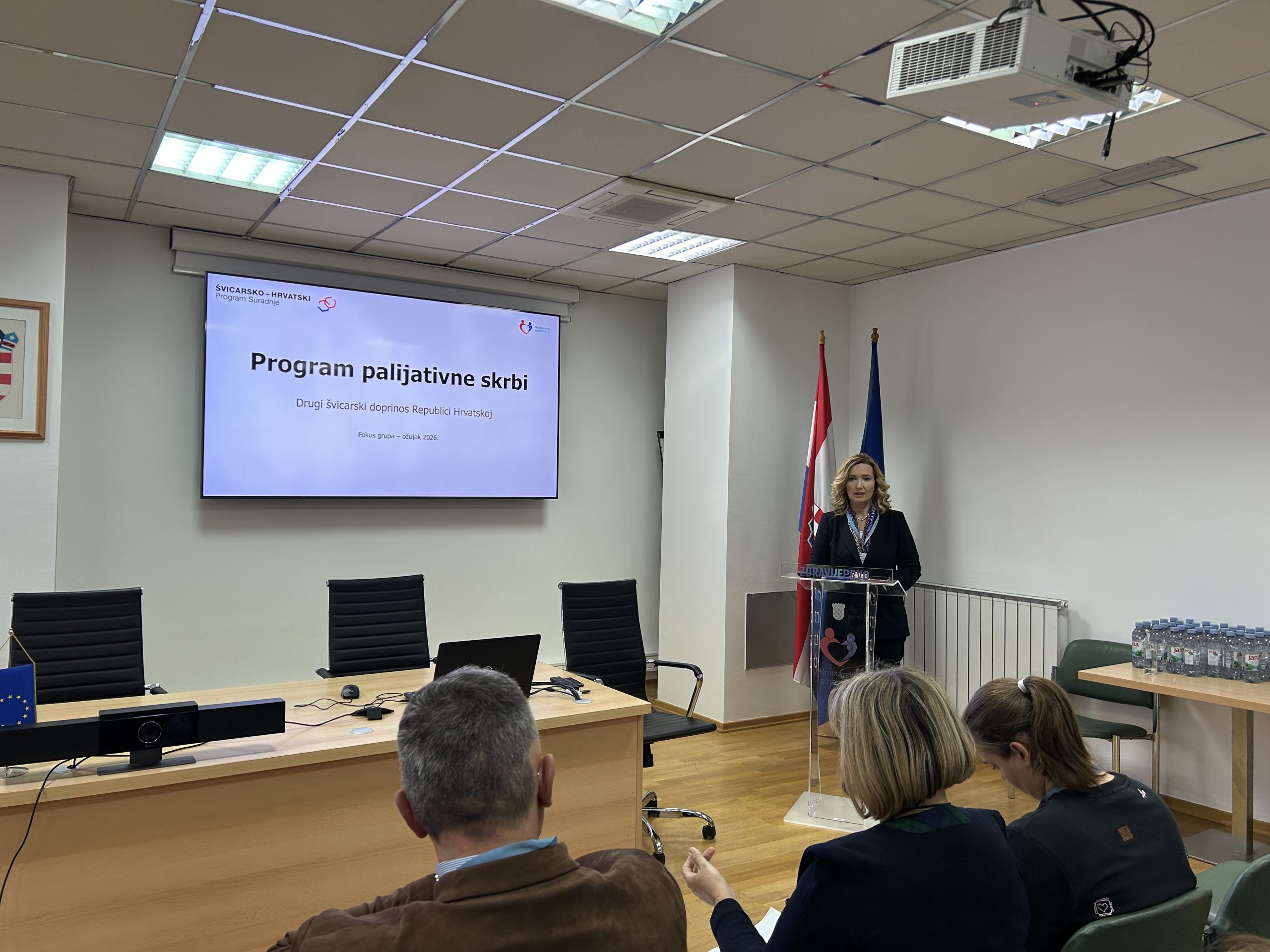
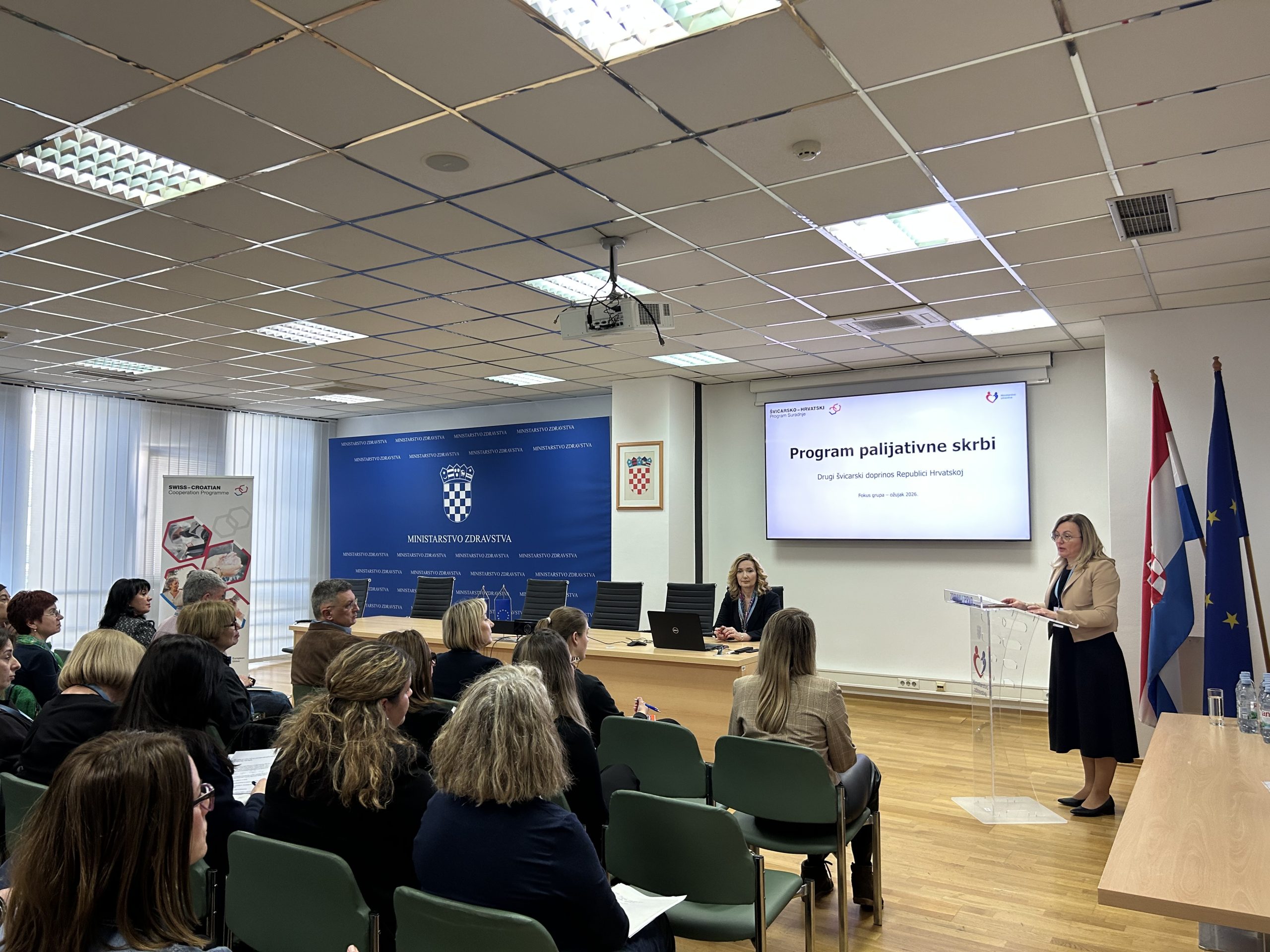
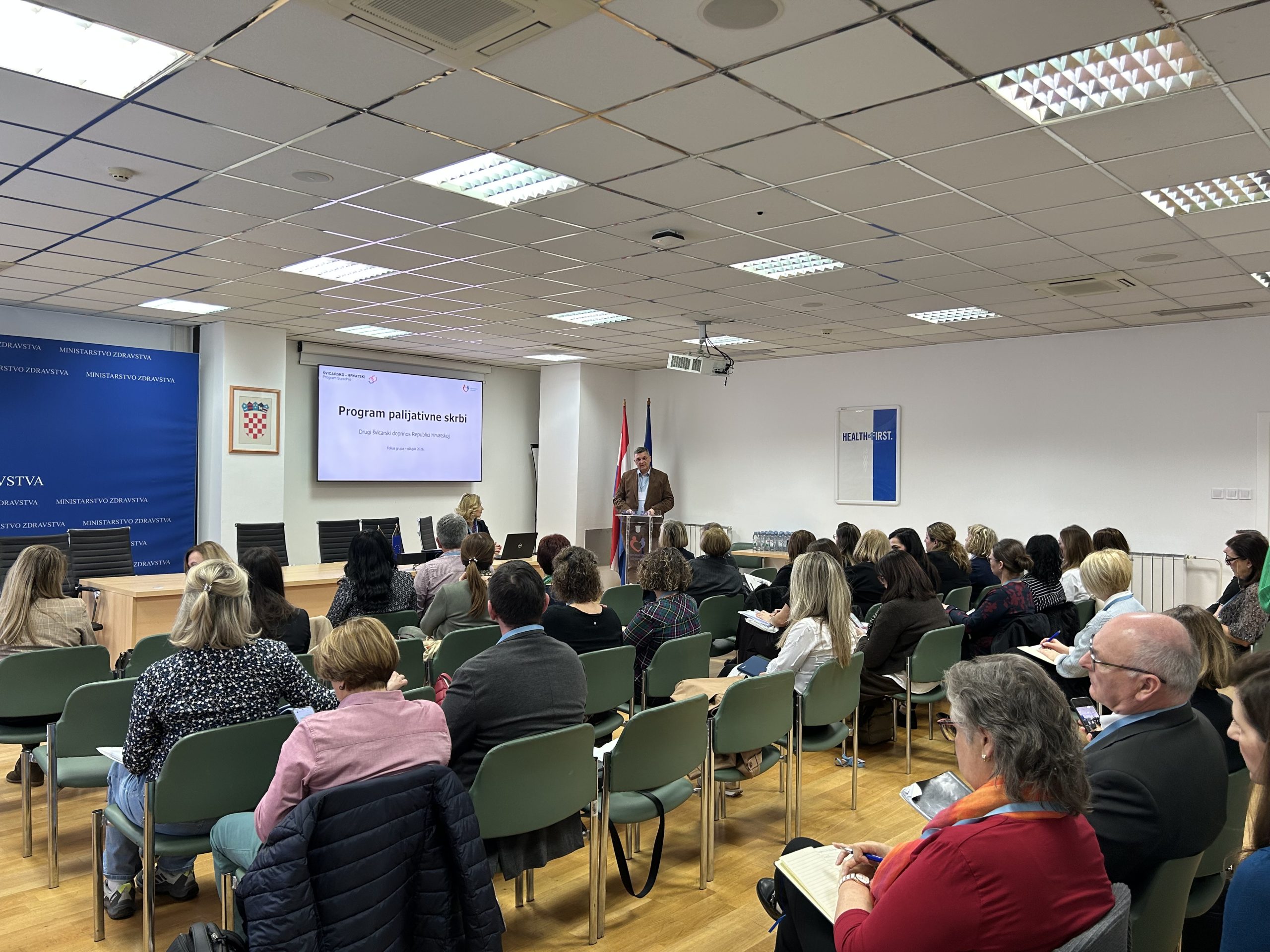
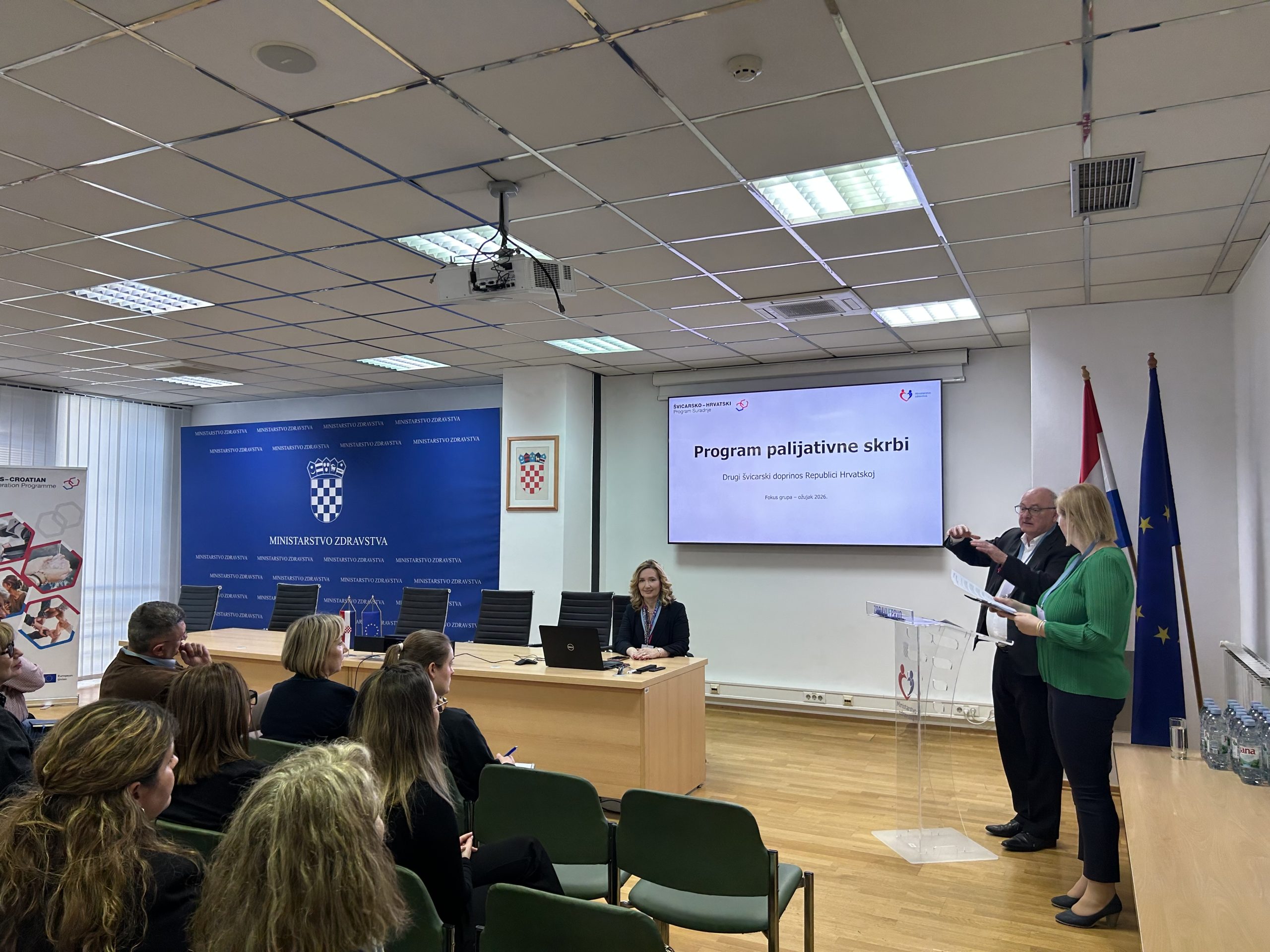
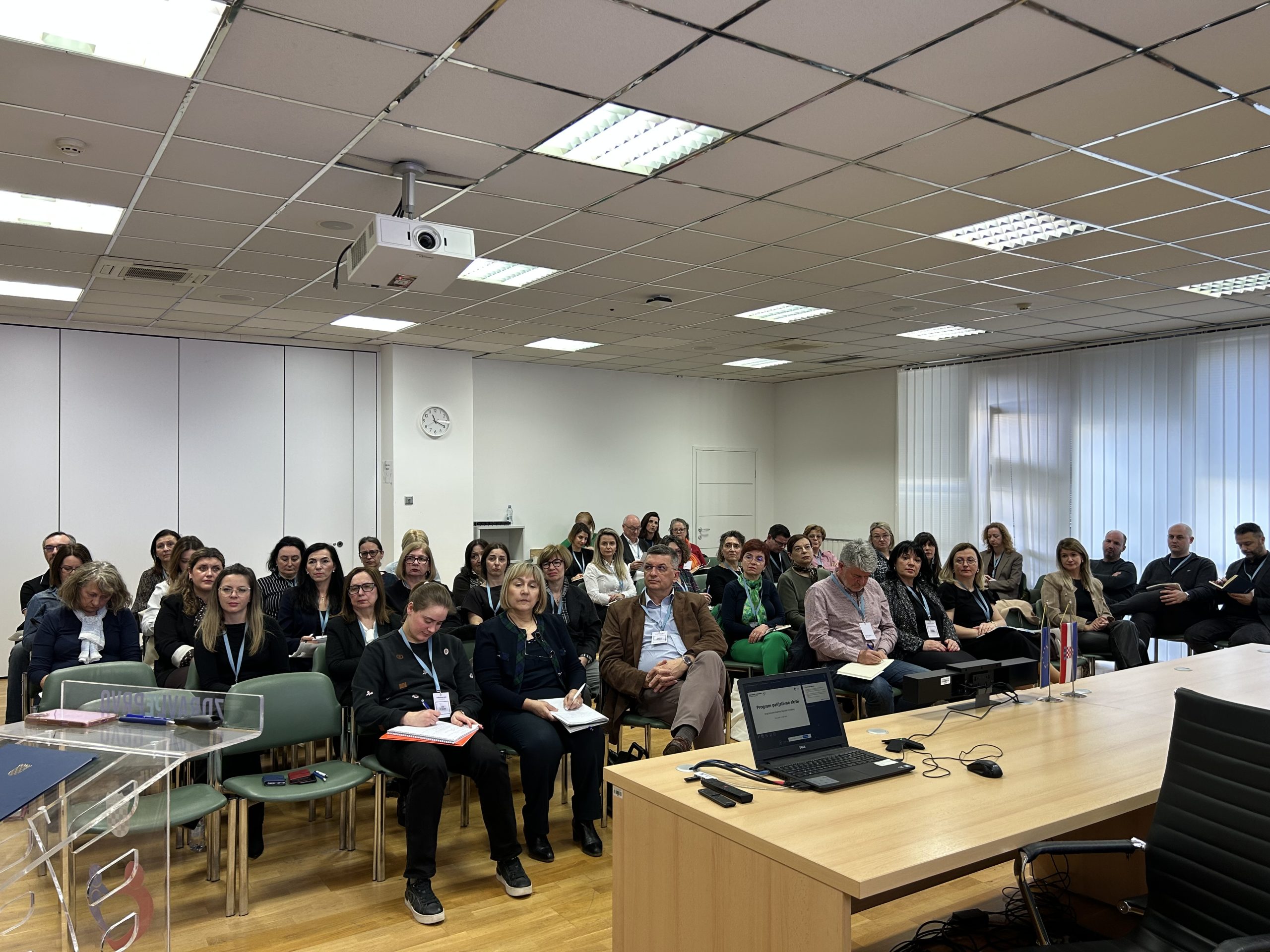
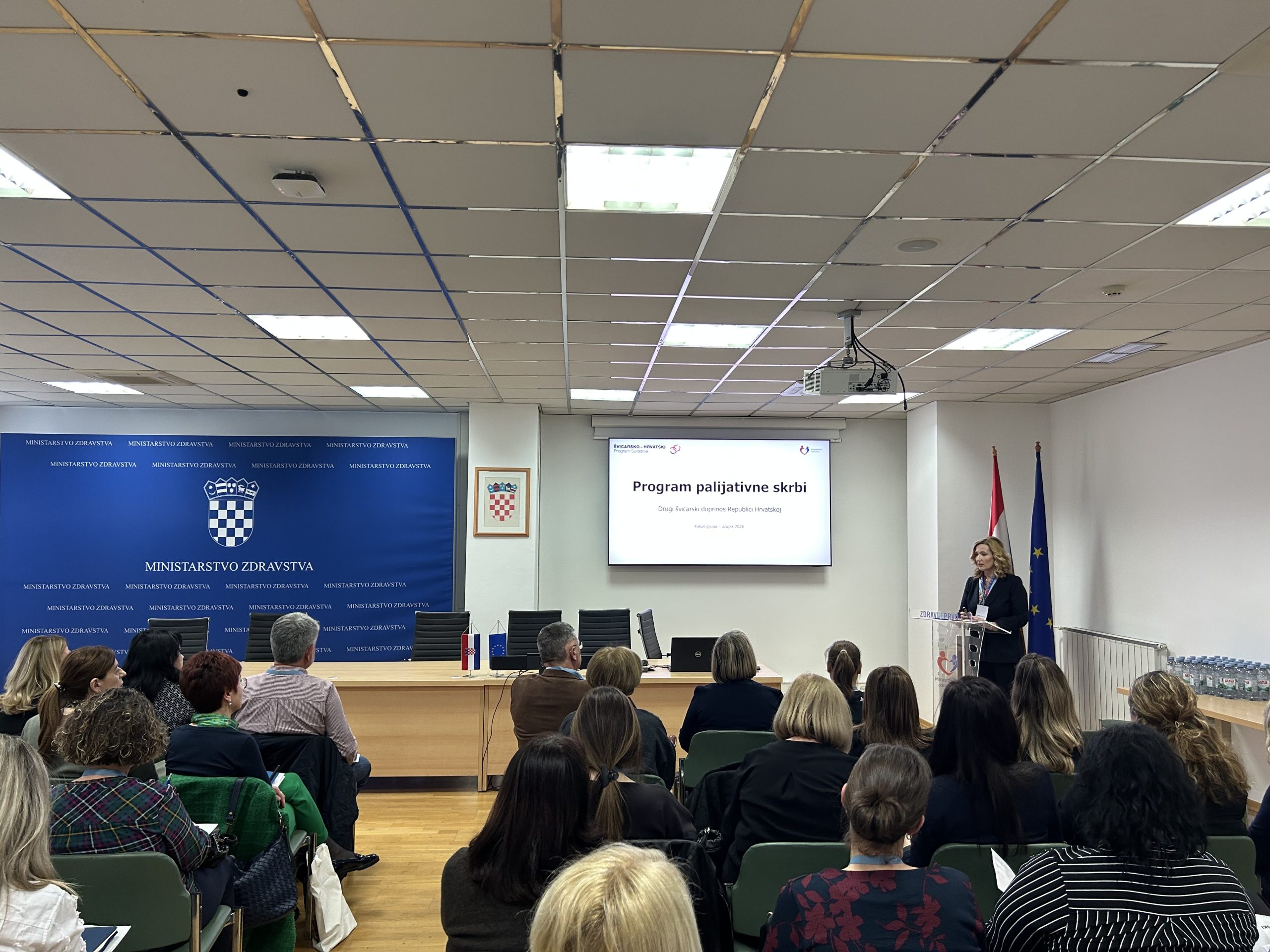
On March 5 and 6, two focus groups were held at the premises of the Ministry of Health, where the educational component to be implemented in the framework of the Palliative Care program, funded by the Second Swiss Contribution, was discussed.
At the opening, participants were addressed by Mr. Roland Python, Head of the Swiss Contribution Office in Zagreb; Ms. Natalija Laštro, Head of the Sector for EU Programs and International Financial Mechanisms at the Ministry of Regional Development and EU Funds; and Mr. Mate Devčić, Director of the General Hospital “Dr. Tomislav Bardek” from Koprivnica. Ms. Ivana Portolan Pajić, MD, MSc in Public Health, authorized to perform the duties of Director at the Ministry of Health, presented the main features of the educational component.
The educational component includes, among other things, five types of training and a train-the-trainer module, and is aimed at developing the knowledge, skills, and competencies necessary to provide integrated, accessible, and high-quality palliative care in all regions. The primary goal of palliative care is to alleviate suffering through timely identification, assessment, and treatment of pain, as well as other physical, psychological, social, and spiritual needs. Due to the complexity and specific requirements of this field, systematic education of all participants in palliative care—healthcare professionals, non-health staff, volunteers, and family members—is a necessary prerequisite for quality, safe, and dignified care.
The focus group on the first day primarily gathered representatives of primary healthcare, while the focus group on March 6 brought together representatives of the clinical/hospital level. Members of professional palliative care teams participated in discussions on both days, presenting practical experiences of specialized services and enabling comparison between levels of care. The focus groups were also attended by Ms. Andrea Tschopp, an expert from the Swiss Tropical and Public Health Institute, and Stela Fišer Marković from the Swiss Contribution Office in Zagreb.
After the discussion, participants were given evaluation questionnaires with the aim of collecting their opinions and systematically obtaining feedback in order to improve the planning and quality of future training.
The Palliative Care program is implemented by the Ministry of Health, and its goal is to improve the availability and quality of palliative care in the Republic of Croatia, ensure its equal accessibility in all parts of the country, and strengthen the capacity of the healthcare system to provide comprehensive and continuous care to patients and their families.